
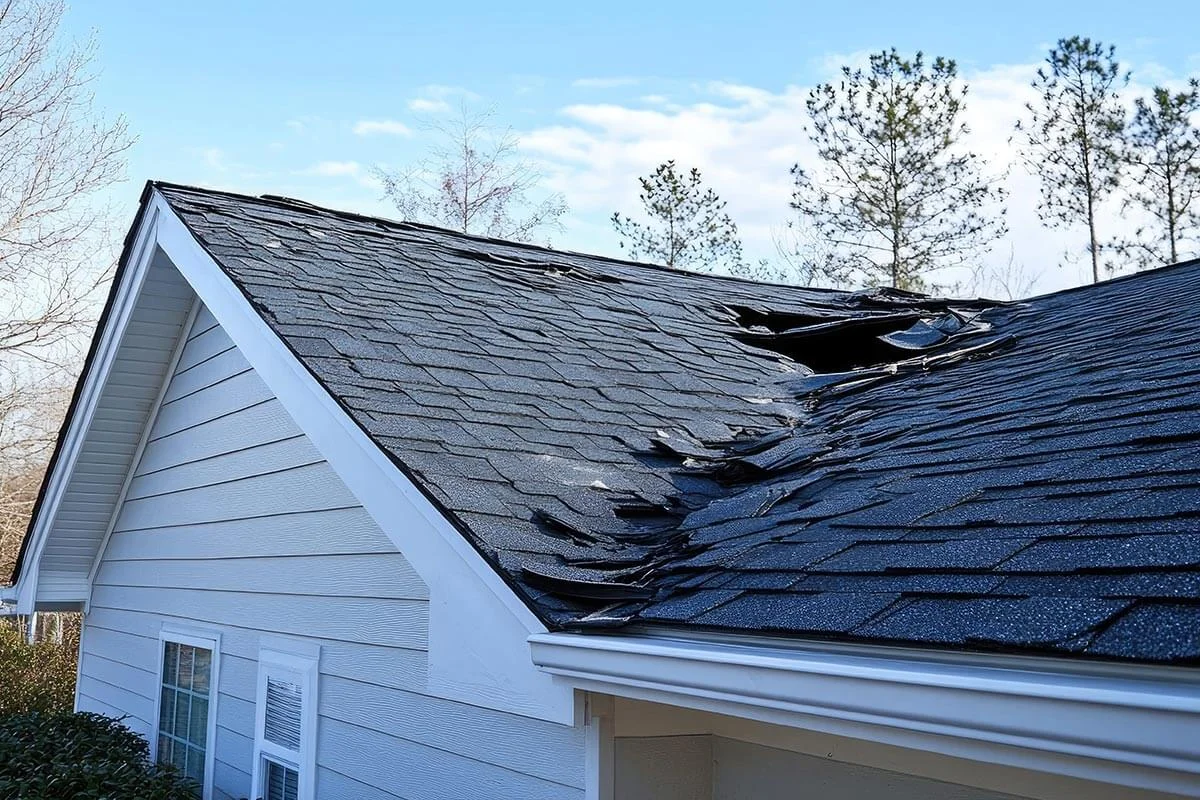
Storms can cause serious damage to your roof in a short amount of time. High winds, hail, and heavy rain can weaken roofing materials and lead to leaks or structural issues.
Acting quickly after a storm helps prevent further damage and reduces repair costs. Understanding what to look for and what steps to take can protect your home and make the repair process easier.
Types of Storm Damage
Different types of storms can affect your roof in different ways.
Common types of storm damage include:
- Hail Damage – dents, cracks, and granule loss
- Wind Damage – lifted or missing shingles
- Water Damage – leaks and moisture buildup
- Debris Impact – damage from falling branches or objects
Each type of damage requires proper inspection and repair.
Signs of Storm Damage on Your Roof
After a storm, it is important to check for visible signs of damage.
Look for:
- Missing or loose shingles
- Dents or cracks in roofing materials
- Leaks or water stains inside your home
- Debris on the roof
- Damaged gutters or flashing
Even small damage can lead to bigger problems if not addressed quickly.
What to Do After a Storm
Taking the right steps immediately after a storm can prevent further issues.
Step-by-step actions:
Step 1: Inspect from the Ground
Look for visible damage without climbing onto the roof.
Step 2: Document the Damage
Take photos and videos for insurance purposes.
Step 3: Contact a Roofing Professional
Schedule a full inspection to identify hidden damage.
Step 4: Temporary Protection
Use tarping if there are active leaks.
Step 5: File an Insurance Claim
Submit documentation to your insurance company.
Storm Damage Roof Repair Process
Understanding the repair process helps you know what to expect.
Step 1: Professional Inspection
A detailed inspection identifies all damage.
Step 2: Damage Documentation
Photos and reports are prepared for insurance.
Step 3: Temporary Repairs
Emergency fixes like tarping prevent further damage.
Step 4: Insurance Coordination
Contractors may work with adjusters to assess damage.
Step 5: Final Repairs or Replacement
Damaged materials are repaired or replaced.
Storm Damage Insurance Claims
Insurance can help cover the cost of repairs if the damage is caused by a storm.
Tips for a successful claim:
- Take clear photos immediately
- Keep records of all damage
- Do not delay filing your claim
- Work with a professional contractor
- Understand your policy coverage
A well-documented claim increases your chances of approval.
Emergency Roof Repairs
Emergency repairs are needed when your home is exposed to further damage.
Common emergency solutions:
- Roof tarping
- Temporary sealing
- Leak control
These solutions protect your home until permanent repairs are completed.
Cost of Storm Damage Roof Repair
Costs vary depending on the severity of damage.
Typical cost ranges:
- Minor repairs: $200 – $1,000
- Moderate damage: $1,000 – $5,000
- Major damage or replacement: $5,000+
Cost factors:
- Extent of damage
- Roofing material
- Labor costs
- Insurance coverage
Acting quickly can reduce overall repair costs.
Prevent Future Storm Damage
While storms cannot be avoided, you can reduce damage risk.
Prevention tips:
- Schedule regular roof inspections
- Use impact-resistant materials
- Maintain gutters and drainage
- Trim nearby trees
- Fix minor issues early
Preventative care improves your roof’s durability.
Common Mistakes to Avoid After Storm Damage
- Ignoring small damage
- Delaying inspection
- Attempting unsafe DIY repairs
- Not documenting damage
- Hiring unlicensed contractors
Avoiding these mistakes helps ensure proper repairs.
How to Choose a Storm Damage Roofing Company
Choosing the right contractor is critical after a storm.
Look for:
- Licensed and insured professionals
- Experience with storm damage repair
- Assistance with insurance claims
- Fast response time
- Strong local reputation
A reliable contractor makes the process smooth and stress-free.
Conclusion
Storm damage roof repair requires quick action and proper planning. Even minor damage can lead to major issues if left untreated.
By understanding the signs, acting fast, and working with professionals, you can protect your home and restore your roof effectively.
FAQs (Readable + SEO Optimized)
How do I know if my roof has storm damage?
Look for missing shingles, leaks, dents, or debris after a storm.
How soon should I repair storm damage?
You should act immediately to prevent further damage.
Does insurance cover storm damage roof repair?
Yes, most policies cover storm-related damage, but it depends on your coverage.
Can I repair storm damage myself?
It is not recommended due to safety risks and improper repairs.
What is hail damage on a roof?
Hail damage includes dents, cracks, and loss of protective granules on shingles.
CTA (Conversion Section)
Get Fast Storm Damage Roof Repair
Protect your home after severe weather. Schedule a professional inspection and get expert help with repairs and insurance claims.


